Lynne Graham’s Doctorate in Sabbing

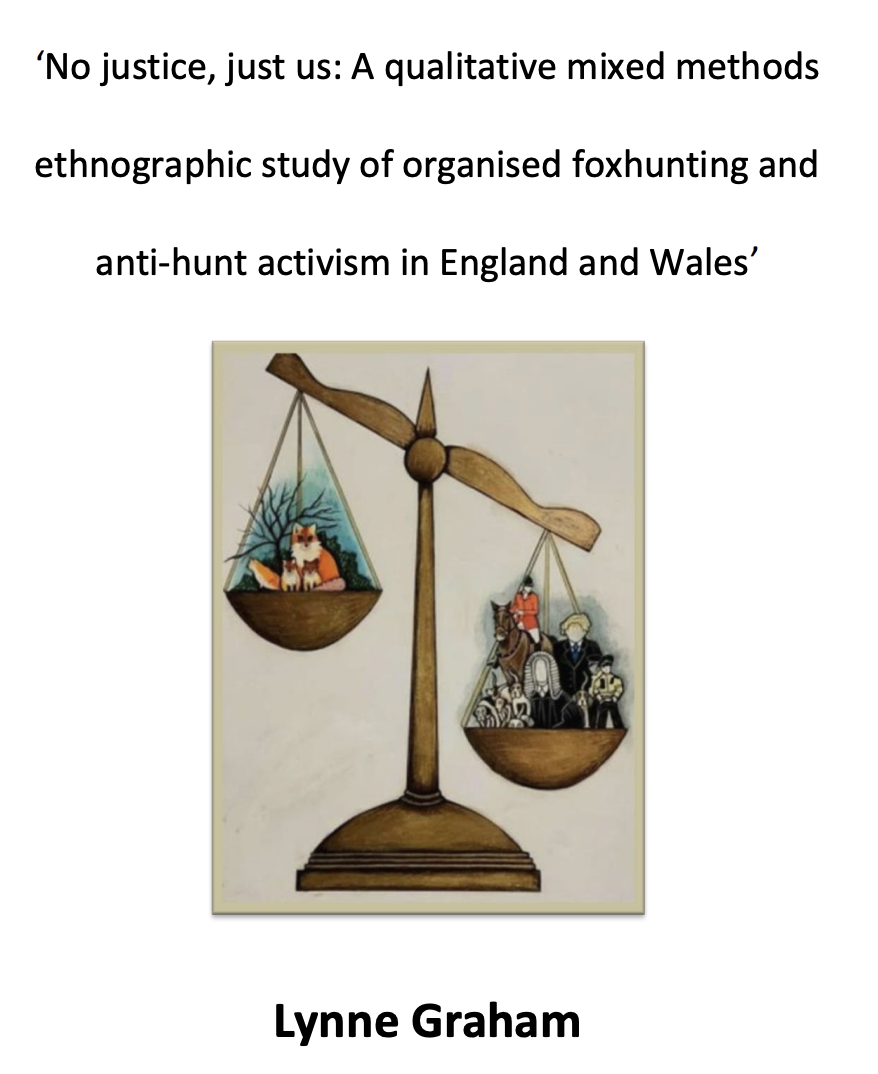
It is not often that the sab movement submits itself for examination. This month, Lynne Graham's 496-page doctoral thesis appeared on Northumbria University's research portal, entitled: No Justice, Just Us: A qualitative mixed methods ethnographic study of organised foxhunting and anti-hunt activism in England and Wales.
Graham is the founder and director of Northumberland Hunt Watch, the self-styled "wildlife guardians", and previously an active member of the North East Hunt Monitors - a group whose relationship with her ended rather publicly. The doctorate is no secret: she told an interviewer last year she was "concluding a PhD in Criminology specialising in foxhunting with hounds”.
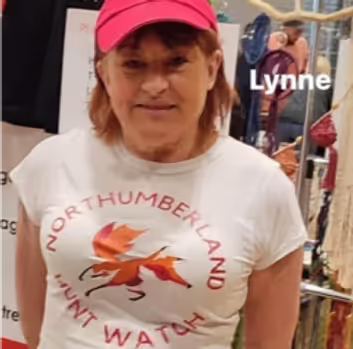
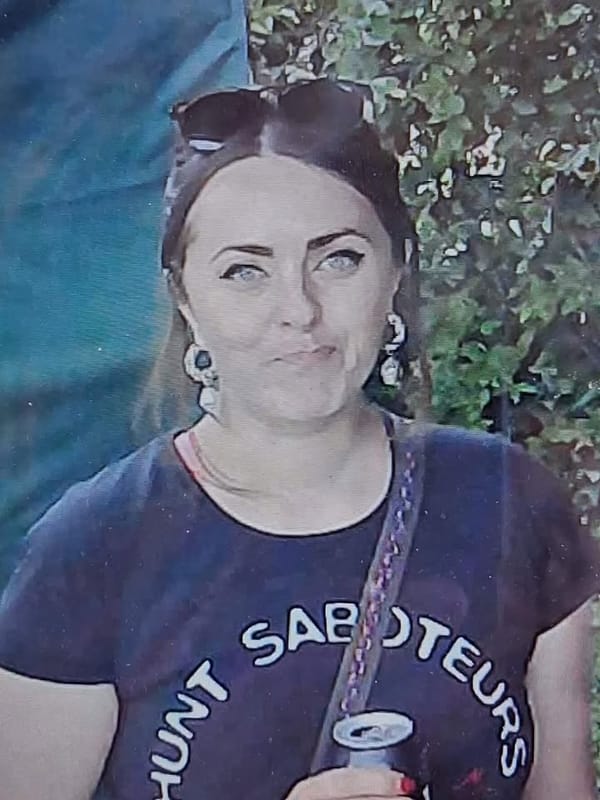
To her credit, she doesn’t hide it. The thesis opens with “Why me? Memoirs of an activist researcher” (p.18) and states plainly: “I am a member of the anti-hunt movement and an anti-hunt activist” (p.116); “I run my own group of activists” (p.125). However, Northumberland Hunt Watch tells the public something different: “We refer to ourselves as volunteers or wildlife guardians, rather than sabs, protesters, or activists.” In the field, a guardian; in the footnotes, an activist.
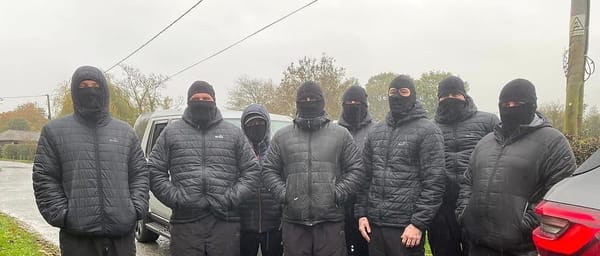
The study's method deserves attention, because this will be cited as the "first empirical criminological study" of trail hunting. Its 18 "ethnographic observations" were overt monitoring of trail hunts (p.138) - in plain English, the fieldwork was sabbing - all in a single, unnamed region, which the thesis puts down to Covid and time constraints. Graham monitors hunts in Northumberland. Draw your own map
The interviews were recruited “via my existing social network” (p.124) - that is, the anti-hunt movement - and the respondent codes tell the story of the sample: dozens of sabs, monitors and campaign figures against a small handful from the hunting world. Hunts she emailed didn’t reply; one hunt servant agreed, then withdrew. Her explanation is the most honest line in the document: “the hunt fraternity would rightly consider me an opponent” (p.127). The thesis itself concedes its findings “should not be read as statistically representative” (p.423), a caveat unlikely to survive contact with a press release.
The conclusions are as expected: trail hunting is a “smokescreen”, foxhunting a “crime of the powerful”, and sabs are “effectively acting to uphold the law”. The recommendations (pp.392–410) are where it stops being a study and becomes a manifesto: criminalise trail hunting outright; a new offence of “going equipped to hunt illegally” for possessing dogs or equipment; strict liability for farmers and landowners if a dog pursues a wild mammal on their land “regardless of intent or knowledge”; the burden of proof reversed so hunts must prove their innocence; licensed drag hunts publishing meet locations for police spot checks; custodial sentences; a national barred list. The Hunt Saboteurs Association’s wish list, with a bibliography.
Still, congratulations are in order. Six years standing in Northumberland field margins, forty-odd chats with friends, and one region's worth of hunts later. She spent four hundred pages searching the countryside for a closed circle that listens only to its own - then proved one exists by interviewing her own social network. She could have saved herself the fieldwork and read her own methodology chapter.